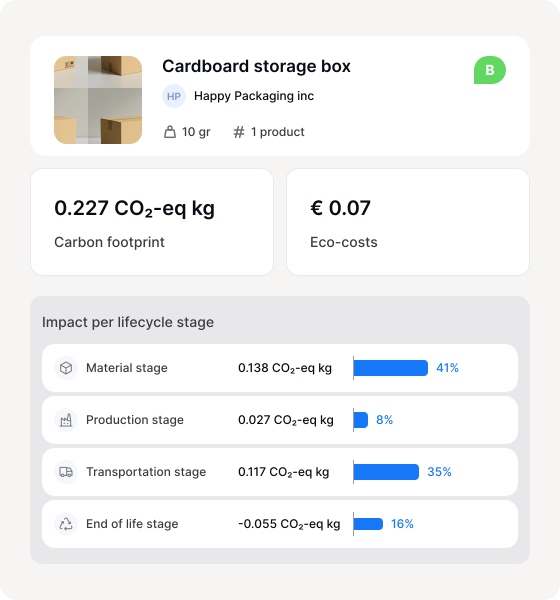
Calculate product footprints at scale.

Enrich your product data with CO₂, eco-costs and compliance-ready footprint data for packaging and non-food products. Generate product passports, compare alternatives and create customer-ready reports at scale.

Trusted by producers and distributors

Why Pickler

Turn product data into product footprint data your team can use.

Pickler gives your team eaccess to verified product footprints and use the results across customer questions, product comparisons, reporting and commercial decision-making.

Pickler for sustainability teams.

Create, manage and share product footprint data internally.

  • Replace manual spreadsheet work

  • Create trusted product footprints

  • Keep your data up to date

  • Verified methodology and compliant data

Pickler for commercial teams.

Give sales and account teams the proof they need to answer customers and compare products

  • Answer sustainability questions faster

  • Compare products with confidence

  • Share proof, not claims

  • Build customer trust

How it works

Product data in. Footprint data out.

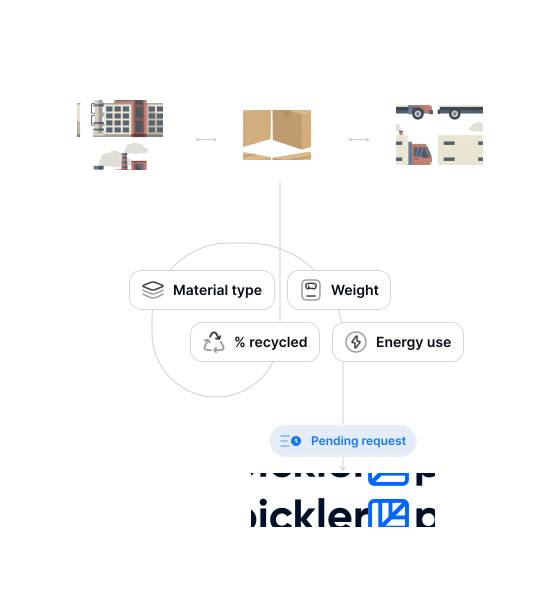
Start with the product data you already have. Pickler calculates verified footprint data and turns it into outputs your team can use.

1. Connect your product data

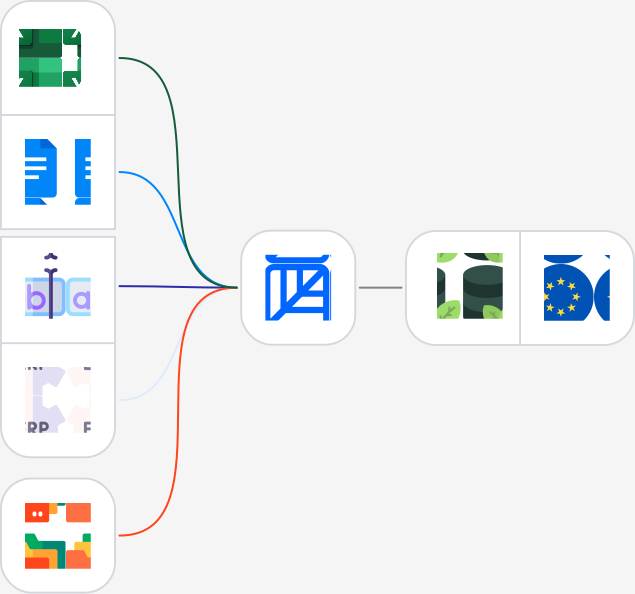
Bring in data from ERP, PIM, spreadsheets, APIs or suppliers.

2. Calculate and automate footprint calculations

Calculate CO₂, eco-costs and other environmental impact data using verified methodology and IDEMAT background data.

3. Use, share and sync

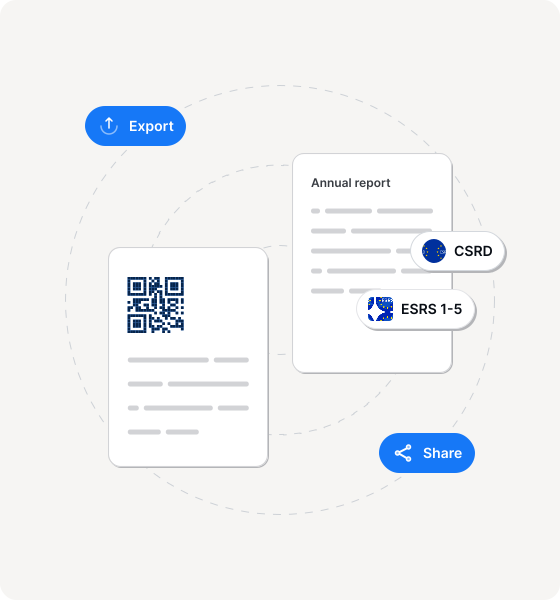
Use the results in product passports, comparisons, reports and customer conversations. Connect through API when you are ready to scale and let data flow back into your ERP.

software

Turn sustainability data into action.

Pickler helps you answer questions with confidence, stay ahead of legislation, and embed sustainability in your strategy.

How it works

A footprint engine that turns product data into sustainability metrics

Pickler calculates product-level footprints and generates the sustainability data you need to answer customers questions, internal reporting and compliance.

1

Upload your product data

Import products one by one, spreadsheets import or syncs your productdata directly using our API. Unstructured data? Let Pickler take care of that.

aligned with GS1 data structure
2

Calculate footprints at scale

Our engine calculates the lifecycle impact for every SKU, even if there are data gaps. Get instant access to granular data, including carbon footprints, eco-costs, and ESRS 1-5 metrics.

Certified methodology — verified by Normec
GHG protocol
ISO 14040/44 and 14008 compliant
3

Use and integrate your data

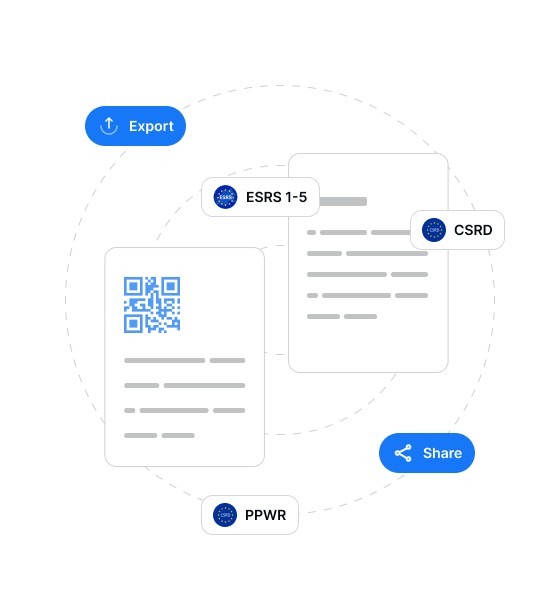
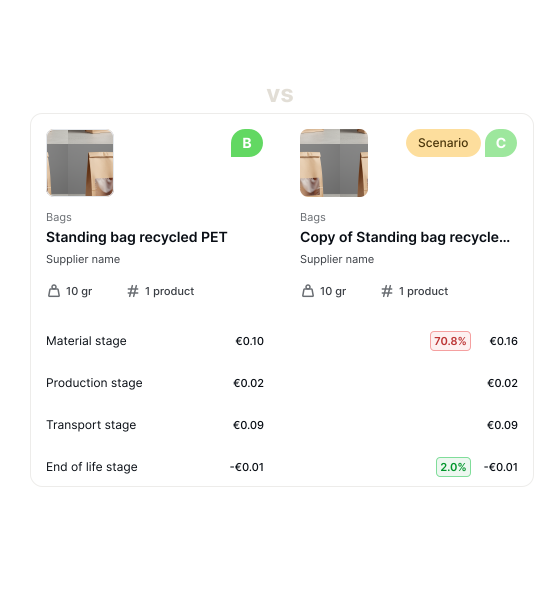
Put the results to work. Create side-by-side comparisons to win sales, share Digital Product Passports, or sync impact data back into your own systems via API for internal reporting.

CSRD and PPWR ready
3

Use and integrate your data

Put the results to work. Create side-by-side comparisons to win sales, share Digital Product Passports, or sync impact data back into your own systems via API for internal reporting.

CSRD and PPWR ready
industries

Sustainability data, accross industries

Explore how Pickler turns product specifications, material data and supplier information into footprints, product passports, comparisons and system-ready data across different product categories.

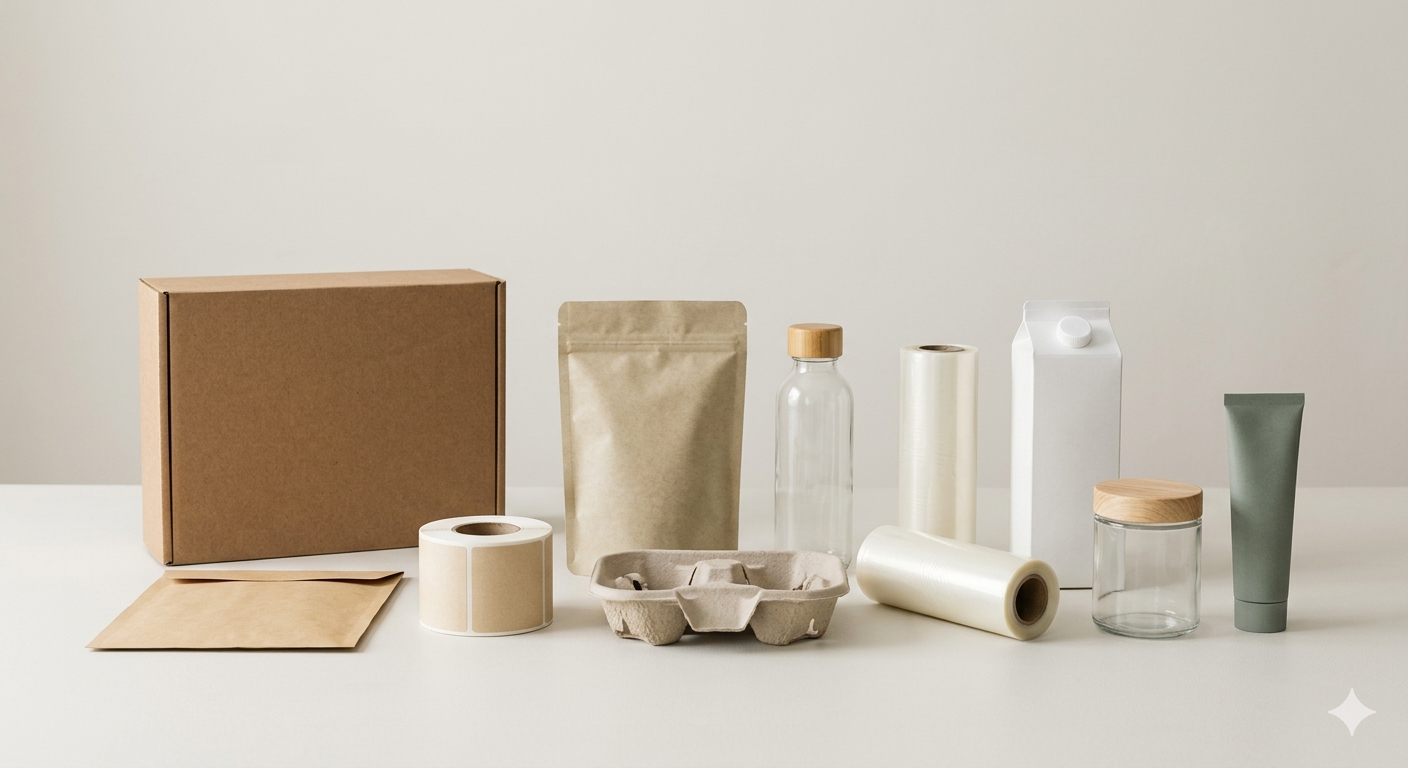
Packaging footprints depend on material type, weight, recycled content, coatings, labels, inks, transport and end-of-life. Pickler helps calculate and compare sustainability data for primary, secondary and transport packaging.

Boxes
paper carrier bags
Pouches
Mailers
Cartons
Films
Trays
mailing envelopes
Jars
Tubes
and more

Apparel footprints are shaped by fibre composition, fabric weight, dyeing, finishing, packaging, transport and supplier data. Pickler helps create footprint data, product passports and comparisons across collections.

T-SHIRTS
Hoodies
jackets
shoes
workwear
sportswear
sweaters
Soup containers
and more

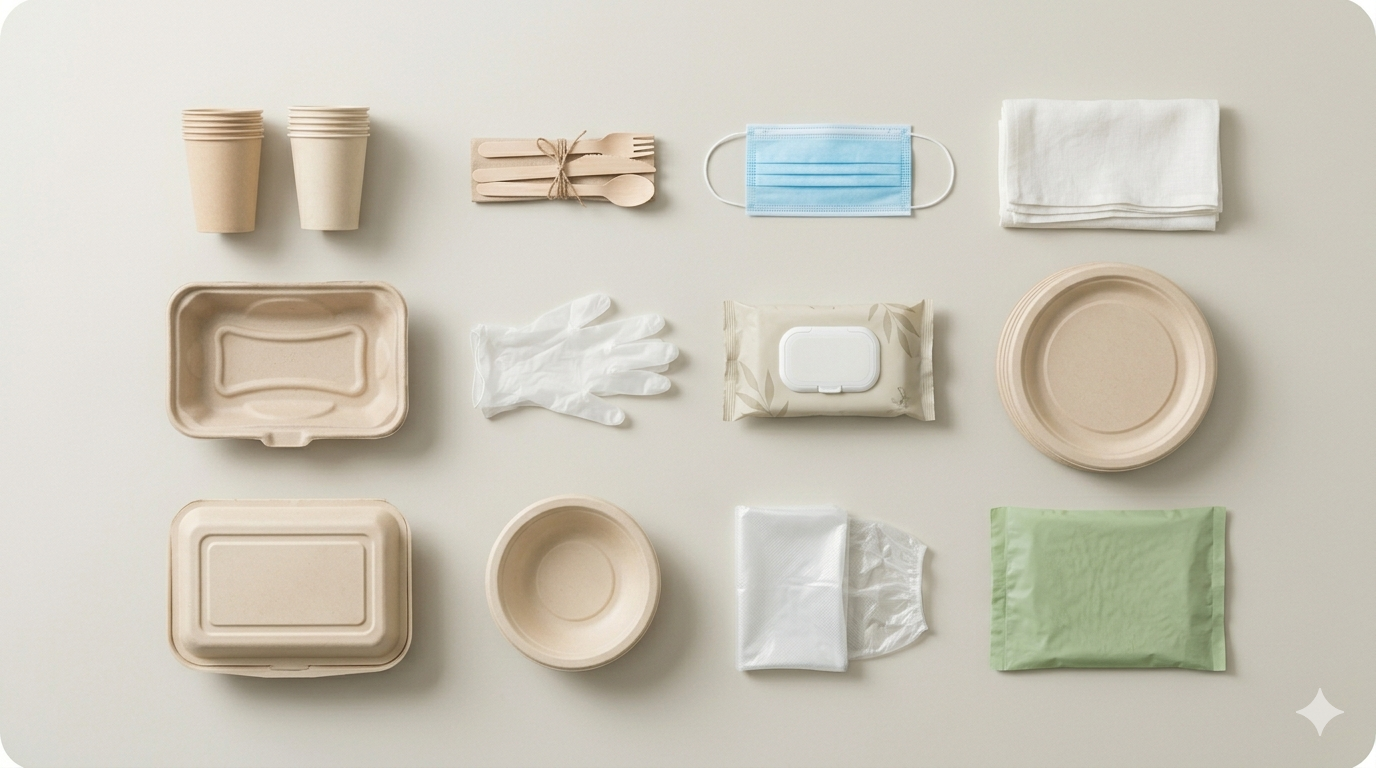
Disposable products are high-volume and material-driven, often made from paper, plastic, bioplastics, fibres, nonwovens or multi-material combinations. Pickler helps compare alternatives with clear footprint data.

cups
cutlery
trays
gloves
wipes
plates
masks
food containers
napkins
bowls
and more

Non-food assortments combine many product types, materials and suppliers. Pickler turns scattered product data into footprints, product passports, comparisons and data that can sync back into your systems.

Cleaning products
office supplies
household items
tools
personal care
kitchenware
toys
safety products
pet products
and more
COMPARISON

A better way to calculate product footprints

Move beyond internal spreadsheets and one-off LCA projects. Pickler helps you create verified footprint data, product passports and comparisons your team can use every day.

What you need Pickler Excel Generic LCA tools Consultants ESG platforms
Verified footprint calculations Calculations based on a verified methodology Yes No Depends Yes No / partial
Secondary LCA database Full access to IDEMAT background data IDEMAT No Depends Depends No
Full footprint data Carbon footprint, eco-costs and CSRD / ESRS data Yes Manual Yes Yes Partial
Live product footprints Always available and reusable across teams Yes Manual Expert-led Project-based Partial
Product passports & comparisons Customer-ready reports, passports and comparisons Yes Manual Limited Project-based Limited
Built for scale Spreadsheet import, API access and 1000s of products Yes Manual Technical No Partial
Commercial team access Easy to use beyond sustainability teams Yes No No Slow Partial
Predictable costs No project-by-project pricing Yes Hidden manual cost Expert cost Project-based Enterprise cost
testimonials

Used by teams that need reliable product impact data

Pickler helps companies move from ad hoc calculations to structured footprint data they can use every day.

Thanks to Pickler, our customers gain clear insight into the environmental impact of their packaging choices and can easily compare more sustainable alternatives.

Richard Oppenkamp
CEO

Pickler enabled us to quickly manage our packaging footprint and drive both carbon reduction and new marketing opportunities.

Clément Pascal
President

Pickler enables us to clearly understand and communicate our product impact, driving transparent, science-based decisions.

Lea Maguero
Head of Sustainability Global

The software is credible, easy to use, and the reports are visual and easy to understand. Pickler supports our ambition to bring our sustainability services to the next level.

Michelle Verdaasdonk
Sustainability manager

Pickler’s expertise and independence give us the confidence to make better decisions and secure a front-runner position in sustainability and servicea.

Mattijs Beelen
CEO

A solution we were looking for, for a very long time already.

Jan-Peter Ruis
CEO

With having scope 3 data of all our packaging, we can deliver a much better service.

Roland van Bussel
Operations Manager

We can now showcase our sustainable leadership in the horti- and floriculture market.

Mirjam Colijn
Marketing & CSR Manager

With Pickler, we now guide our customers in making data-driven sustainable decisions that fit their needs.

Jan Koelewijn
Managing Director
How it works

Turning raw data into commercial advantage

From unstructured product data to compliance-ready reports and certified footprints, step by step.

standards & connectivity

Secure. Compliant. Connected.

Pickler is enterprise-ready: integrate with any ERP, stay aligned with EU regulations, and protect sensitive data with enterprise-grade security.

Certified methodology

Methodology and calculations verified by Normec France.

ISO Compliant

Aligned with ISO 14040/44, ISO 14008, and EN 15804.

Green Claim directive

In line with the Green Claim Directive, communication approved by ACM.

Powered by IDEMAT

Based on the independent IDEMAT database, maintained by TU Delft

GHG protocol

Following the Greenhouse Gas Protocol standards.

GS1 Aligned

Structured data aligned with GS1 standards.

PPWR ready

Meets requirements of the upcoming Packaging and Packaging Waste Regulation.

CSRD ready

Built to deliver compliant data for CSRD reporting, covering ESRS 1–5.

ERP integration

Scalable API to connect thousands of products.

Enterprise-Grade Security

Encryption, GDPR compliance, and access controls.

Impact for every department

Pickler is made for non-experts, making it easy for every department to access, understand, and act on packaging impact data.

Thanks to Pickler, our customers gain clear insight into the environmental impact of their packaging choices and can easily compare more sustainable alternatives.

Richard Oppenkamp
CEO
Blok packaging
Sustainability

Be on top of your impact reduction

Create, manage, and reduce the footprint for 1000s of  SKUs with minimal workload.

  • Answer questions and provide actionable advice to both your organization and clients.

  • Create reduction plans with ease.

  • Prepare internal and external reports.

How Pickler makes data entry and management easy ➜

A solution we were looking for, for a very long time already.

Jan-Peter Ruis
CEO
Max cases
sales

Close more deals with confidence

Share, Compare, Advice. Meet customer needs with credible environmental insights for your packaging.

  • Win more deals and tenders

  • Deliver better service, by answering to raising demands from customers about sustainability.

  • Feel confident when talking about sustainability.

How Pack Company helps to reduce carbon footprint by 20% ➜

Pickler enabled us to quickly manage our packaging footprint and drive both carbon reduction and new marketing opportunities.

Clément Pascal
President
E3 Cortex
marketing

Promote your sustainable efforts

Stand out with credible environmental evidence. Completely in line with anti-greenwashing legislation.

  • Showcase your commitment to sustainability.

  • Attract like-minded audiences.

  • Increase online sales.

How Panaro MAX® cases uses Pickler's impact widgets ➜

Pickler enabled us to quickly manage our packaging footprint and drive both carbon reduction and new marketing opportunities.

Clément Pascal
President
E3 Cortex

Pickler enables us to clearly understand and communicate our product impact, driving transparent, science-based decisions.

Lea Maguero
Head of Sustainability Global
Biopak

The software is credible, easy to use, and the reports are visual and easy to understand. Pickler supports our ambition to bring our sustainability services to the next level.

Michelle Verdaasdonk
Sustainability manager
Van Gennip Verpakking

Questions? 
We've got answers.

When should product teams care about footprint data?

Product teams should care when material choices, suppliers, weights, packaging formats or product specifications influence impact, cost, compliance or customer demand.

Do we still need consultants if we use product footprint software?

Sometimes, yes. Consultants can help with expert interpretation, strategy or complex studies. Software helps make repeatable product footprint work more scalable and usable day to day.

When is Excel no longer enough for product footprint work?

Excel becomes risky when calculations need to scale, stay consistent, be updated, be explained and be reused by multiple teams.

Why not just use our ESG platform for product footprint questions?

ESG platforms are usually built for company-level reporting. Product footprint questions need product-level data, lifecycle logic and outputs that teams can use in product and customer workflows.

What is the difference between reporting data and customer-proof data?

Reporting data is often aggregated for internal or regulatory use. Customer-proof data needs to be product-specific, explainable and easy to share in a commercial context.

Can we make green claims if our data is not perfect?

Be careful. Claims should be specific, substantiated and clear about scope. If data is incomplete, avoid broad claims and explain the basis of the statement.

How do we prepare for product passports without turning it into a huge data project?

Start by structuring the product data, impact data and evidence you already need for customers, claims and reporting. Product passports work best when the data layer is reusable.

How can product footprint data support CSRD or reporting preparation?

Product footprint data can support reporting preparation by making impact more granular. It helps teams understand product-level drivers behind broader scope 3 and sustainability data.

How do we explain assumptions without weakening the story?

Be open about assumptions and why they were used. Transparency does not weaken the story; it makes the result easier to trust and improve.

Why use eco-costs if customers mostly ask for CO2e?

CO2e is important, but it only covers climate impact. Eco-costs help teams compare broader environmental impact in one understandable value.

What should we do when footprint results are surprising?

Use surprising results as a signal to inspect the data, assumptions and lifecycle drivers. Sustainability is often less intuitive than it looks.

How do we get internal teams to trust the footprint numbers?

Make the method, data sources, assumptions and limitations visible. Trust grows when teams can understand how results were calculated and when to use them.

How do we keep footprint data from becoming outdated?

Treat footprint data as product data, not as a static PDF. Update it when materials, weights, suppliers, volumes or calculation assumptions change.

What product data matters most when we are just getting started?

Start with product identifiers, materials, weights and key product structure. More detailed data can improve results later, but the first step is consistent product records.

How do we find which products deserve attention first?

Look beyond individual product scores. Combine footprint results with volumes, product groups and lifecycle hotspots to find where action can have the most impact.

How do we create a product footprint baseline without getting stuck for months?

Start with the product data you already have, calculate a first structured baseline and improve data quality over time. The baseline should be useful, not perfect.

Why is calculating one footprint not enough for a product portfolio?

One footprint can answer one question. A portfolio needs repeatable calculations, consistent rules and data that can be updated when products, materials or volumes change.

What if a customer asks for data we do not have yet?

Be transparent about what is available, what is estimated and what can be improved. A partial but structured answer is usually better than silence or unsupported claims.

How do we help customers reduce impact instead of only reporting it?

Start with a baseline, find the highest-impact products and compare realistic alternatives. Reduction becomes practical when it is linked to products customers actually buy.

How do we talk about lower-impact products without sounding like we are greenwashing?

Be specific, show the comparison basis and avoid broad words like “green” or “eco-friendly” without evidence. Claims should be measurable and explainable.

What should we show in a key account review besides price and volume?

Show product impact, total footprint, high-impact products and practical reduction options. This makes the review more strategic and helps customers see where improvement is possible.

How do we make sustainability useful for sales without making salespeople LCA experts?

Give sales teams clear outputs, simple explanations and approved proof points. They do not need to calculate everything themselves, but they do need answers they can trust.

Can sustainability data help us win tenders, or is it just a nice extra?

It can help when tenders ask for product-level impact, CO2e, reduction plans, reporting data or substantiated claims. It turns sustainability from a vague promise into evidence.

How do I answer a customer who asks “is this really more sustainable?”

Do not answer with intuition alone. Compare the alternatives with the same method, explain the trade-offs and show why one option performs better or worse.

What do I say when a customer asks for the footprint of a product?

Give a product-specific answer instead of a generic sustainability statement. Use the product footprint, explain the scope and share the underlying proof where needed.

When should I use Pickler instead of a one-off LCA study?

Use Pickler when you need repeatable product impact data across a portfolio, not only one deep study for a single product.

Can Pickler work alongside consultants or ESG tools?

Yes. Pickler can complement consultants and ESG tools by providing structured product-level impact data that those workflows can use.

How is Pickler different from sustainability consultants?

Consultants are valuable for expert advice and one-off studies, while Pickler helps companies manage product impact data continuously across a portfolio.

How is Pickler different from generic LCA calculators?

Generic LCA calculators can be useful for expert modelling, while Pickler is built for scalable, repeatable product impact data across portfolios.

How is Pickler different from ESG reporting platforms?

ESG platforms usually focus on company-level reporting, while Pickler focuses on product-level impact data that teams can use commercially and operationally.

How is Pickler different from internal spreadsheets?

Spreadsheets are flexible, but Pickler is built to make product impact calculations more structured, repeatable and usable across teams.

What compliance data can be shown in a Pickler product passport?

A Pickler product passport can show selected compliance-related product data alongside footprint results, depending on what data is available and configured.

How does GS1 relate to product impact data?

GS1 helps identify products and packaging hierarchies, which can make product impact data easier to structure, connect and share.

How does Pickler relate to PACT?

Pickler can support PACT-compatible thinking for product carbon footprint data exchange, but implementation depends on the exact data requirements and workflow.

How does Pickler relate to PEF?

Pickler can align with several Product Environmental Footprint principles, but it should not be described as a full PEF study unless specifically supported.

Does Pickler guarantee legal compliance?

No. Pickler provides product impact data and documentation support, but it does not guarantee legal compliance on its own.

Can Pickler help substantiate green claims?

Yes. Pickler can help substantiate product-level sustainability claims with structured impact data, but claim wording and legal use still need careful review.

Can Pickler support Digital Product Passport preparation?

Yes. Pickler can support Digital Product Passport preparation by combining product impact data with structured product and compliance-related information.

Can Pickler support PPWR alignment?

Yes. Pickler can support PPWR alignment by structuring product, material and compliance-related data, but it does not guarantee legal compliance by itself.

Can Pickler support CSRD reporting preparation?

Yes. Pickler can support CSRD reporting preparation by providing structured product-level impact data, but it does not replace a full CSRD reporting system or legal review.

Does Pickler calculate product footprints automatically?

Pickler automates parts of the calculation workflow, but it still needs structured product data and appropriate assumptions to produce useful results.

What is data quality in product footprint calculations?

Data quality describes how reliable, complete and representative the inputs and assumptions behind a product footprint are.

Can Pickler account for packaging layers such as pack, case and pallet?

Yes. Pickler can account for product, pack, case and pallet layers where those layers are relevant to the product footprint.

How do lifecycle stages work in Pickler?

Pickler breaks product impact into lifecycle stages such as materials, processing, transport and end of life to show where impact comes from.

What is the difference between carbon footprint and eco-costs?

Carbon footprint focuses on climate impact, while eco-costs provide a broader environmental impact indicator across more impact categories.

What is CO₂e?

CO₂e means carbon dioxide equivalent. It expresses the climate impact of different greenhouse gases in one comparable unit.

What is an eco-score?

An eco-score is a simple A+ to G rating based on eco-costs that helps communicate product impact more clearly.

What are eco-costs?

Eco-costs express broader environmental impact in monetary terms, helping teams compare more than climate impact alone.

How does Pickler keep footprint calculations comparable?

Pickler keeps calculations comparable by using consistent methodology, structured product inputs, fixed calculation rules and repeatable impact outputs across products.

How does Pickler handle missing product data?

Pickler can use documented defaults and secondary data to keep calculations possible when product data is incomplete, while showing where better data can improve quality.

What is primary data in product footprint calculations?

Primary data is product- or supplier-specific data, such as actual material weight, composition, supplier information, production location or verified process data.

What is secondary data in product footprint calculations?

Secondary data is background environmental data used when company-specific primary data is unavailable or impractical to collect for every material or process.

Why does Pickler use IDEMAT?

Pickler uses IDEMAT because it is well suited to scalable product-level footprinting and supports consistent material, process, transport and energy modelling.

What is IDEMAT?

IDEMAT is a secondary environmental database used by Pickler to support product footprint calculations with background data for materials, energy, transport and processes.

What is Fast-Track LCA?

Fast-Track LCA is Pickler’s scalable approach to lifecycle assessment, focused on the most relevant product data and assumptions needed for repeatable footprint calculations.

Can Pickler calculate impact across a product portfolio?

Yes. Pickler is designed for repeatable product-level impact calculations across portfolios, not only for one-off product studies.

Can Pickler support tender responses?

Yes. Pickler can support tenders by giving teams product-level impact data, comparisons and reports that make sustainability answers more specific.

Can Pickler help answer customer sustainability questions?

Yes. Pickler helps teams answer product-specific sustainability questions with consistent footprint data, lifecycle context and shareable outputs.

Can sales teams use Pickler data with customers?

Yes. Pickler helps sales teams answer customer sustainability questions with product-level data instead of generic claims.

What are scenario products in Pickler?

Scenario products are hypothetical products used to model future products, alternatives or customer-specific cases without presenting them as verified inventory products.

Can Pickler compare products?

Yes. Pickler can compare products or alternatives using consistent indicators such as carbon footprint, eco-costs and eco-score.
Can Pickler show impact data on my website?

Yes. Pickler’s impact widget can display selected product passport data such as carbon footprint, eco-costs or eco-score on a website or platform.

Can Pickler create product passports?

Yes. Pickler can create product passports that combine product impact results, lifecycle information and selected compliance-related product data in a shareable format.

Can I export product impact data from Pickler?

Yes. Pickler supports impact data export so teams can reuse product-level results in reporting, customer communication and internal analysis.

What impact data does Pickler provide?

Pickler provides product-level impact data such as carbon footprint, eco-costs, eco-score, lifecycle breakdowns and supporting compliance or passport fields where relevant.

Does Pickler have an API?

Yes. Pickler offers an API for syncing product and footprint data, typically used by companies that want to connect Pickler with internal systems or customer-facing platforms.

Can I import product data with spreadsheets?

Yes. Pickler supports spreadsheet-based product imports for creating and updating products, managing calculation inputs and preparing product passport data.

Can Pickler calculate product carbon footprints?

Yes. Pickler calculates product carbon footprints and also provides broader environmental impact results such as eco-costs and eco-score where available.

What is a product footprint?

A product footprint measures the environmental impact of a product across relevant lifecycle stages, such as materials, processing, transport and end of life.

What does Pickler do?

Pickler helps companies calculate, manage and use product-level environmental impact data for footprints, comparisons, reports, product passports and sustainability communication.

Which data standards does Pickler comply with?

Pickler’s data model aligns with GS1 standards for product structure and the WBCSD PACT framework for carbon data exchange. This ensures interoperability, traceability, and compatibility with global reporting systems and Digital Product Passports.

What product data do we need to get started?

Most companies already have enough data to start. You can start with basic product data such as materials, weights, and formats. Pickler is designed to work with incomplete datasets, so you don’t need everything upfront.

What kind of products is Pickler built for?

Pickler is designed for companies managing large product portfolios,typically hundreds or thousands of SKUs. It works best for standardized, high-volume products such as packaging and disposable products. However, the model is versatile and supports more products with more complex supply chains.

Is Pickler’s footprint engine and methodology verified and reliable?

Pickler’s calculations use the IDEMAT database and a Fast-Track LCA methodology verified by Normec Verifavia. Results are credible and explainable, but still depend on product data quality and assumptions.

How is Pickler compliant with EU packaging laws?

Pickler helps structure product impact and compliance-related data for frameworks such as CSRD, PPWR and Digital Product Passports, but it does not by itself guarantee legal compliance.

How can Pickler drive commercial success?

Pickler enables sales teams to use sustainability as a competitive advantage. With clear, product-level impact data, you can create side-by-side comparisons, support customer requirements, and win tenders with credible, data-backed insights.

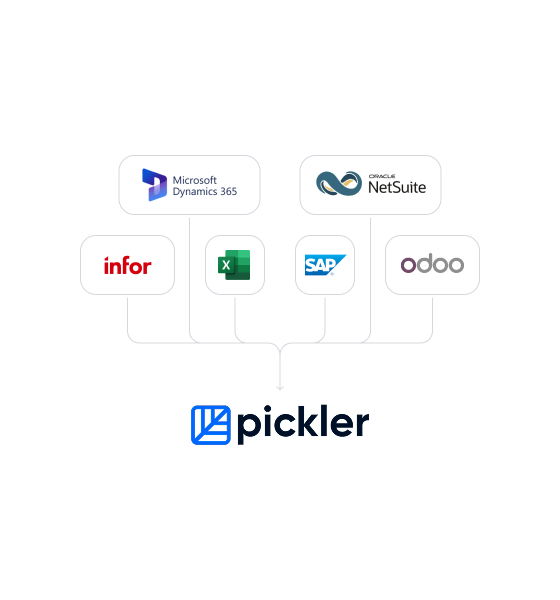
Can Pickler integrate with our current ERP system?

Absolutely. Pickler is enterprise-ready. You can sync thousands of products via our API or use simple spreadsheet uploads to manage your data without manual entry

Can Pickler help structure and clean my data?

Yes. Pickler offers services to clean and structure your product data so it becomes usable for calculations.